Complete guide to paddle mills: working principle, applications, selection criteria & FAQ. Find paddle mill suppliers on ForaIndustry.
The paddle mill — also called a paddle mixer or industrial paddle mixer — is one of the most versatile mixing and size-reduction machines used in process industries. From food powder blending to chemical compounding, paddle mills combine gentle mixing with precise particle conditioning. This complete guide covers how they work, their main applications, and how to choose the right paddle mill for your process.
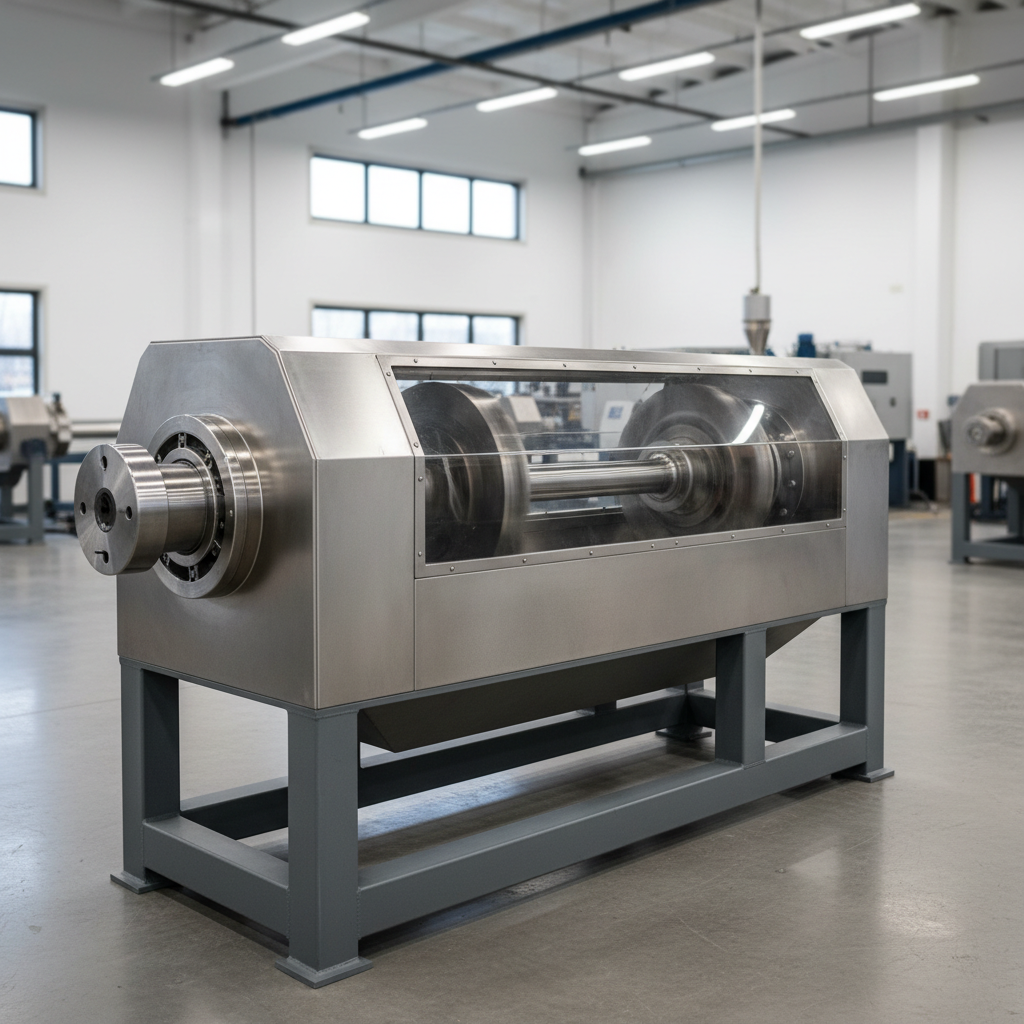
Industrial paddle mill — stainless steel paddle mixer used in food, chemical and pharmaceutical processing
What Is a Paddle Mill?
A paddle mill is an industrial machine that uses rotating paddle-shaped blades mounted on one or two horizontal shafts to mix, condition, or gently crush bulk materials. Unlike hammer mills or ball mills, paddle mills are designed to handle fragile, cohesive, or heat-sensitive materials without causing excessive particle breakdown.
The paddles create a tumbling, folding motion that ensures a homogeneous blend in a short cycle time — typically 1 to 5 minutes for most dry powder applications. Browse all paddle mill suppliers on ForaIndustry to compare specifications and request quotes.
How Does a Paddle Mill Work?
The core working principle is straightforward: two counter-rotating shafts carry offset paddle blades that push material in opposite directions, creating a three-dimensional mixing zone. The key process variables are:
Shaft speed: typically 30–120 RPM, adjusted by the material’s fragility and desired mixing intensity
Fill level: usually 40–70% of the trough volume to allow free movement of material
Paddle geometry: flat paddles for gentle blending, profiled or angled paddles for more intense mixing or conditioning
Temperature control: the jacket (when fitted) can heat or cool the trough for temperature-sensitive processes
Industrial Applications of Paddle Mills
Paddle mills are found across a wide range of industries thanks to their adaptability:
Proper maintenance of a paddle mill ensures long service life and consistent mixing performance:
Inspect paddle wear regularly — worn paddles reduce mixing efficiency and can contaminate the product
Check shaft seals and bearings at scheduled intervals (typically every 500–2000 operating hours)
For food-grade units, establish a validated CIP (Clean-In-Place) or wet cleaning protocol
Lubricate all moving parts according to the manufacturer's schedule, using food-safe grease where applicable
Frequently Asked Questions
What is a paddle mill used for?
A paddle mill is used for gentle blending and mixing of bulk solid materials — powders, granules, pastes, and sludge. Common industries include food processing, chemicals, pharmaceuticals, and building materials. The paddle design allows thorough mixing without damaging fragile particles.
What is the difference between a paddle mill and a ploughshare mixer?
A paddle mill uses flat or angled paddle blades for a gentle folding motion, making it ideal for fragile or heat-sensitive materials. A ploughshare mixer uses curved, shovel-shaped tools that fluidize the powder bed for faster and more intensive mixing. Ploughshare mixers generally achieve better homogeneity faster, but paddle mills are preferred when product integrity is critical.
What materials can a paddle mill process?
Paddle mills can process a wide range of materials including dry powders, granules, cohesive pastes, moist sludges, and even some fibrous materials. They are particularly well-suited to fragile, heat-sensitive, or abrasive products that cannot withstand high-shear mixing. Materials such as flour, cement, fertilizer, pigments, pharmaceutical excipients, and dewatered sludge are all commonly processed in paddle mills.
How long does mixing take in a paddle mill?
Mixing time in a paddle mill typically ranges from 1 to 5 minutes for most dry powder applications, depending on the required homogeneity, fill level, and shaft speed. Continuous paddle mills can process materials in a matter of seconds per pass. Achieving a coefficient of variation (CV) below 5% is the industry standard for acceptable mixing quality.
What is the capacity range for industrial paddle mills?
Industrial paddle mills are available in a very wide range of capacities: from small laboratory units of 5 to 50 liters up to large-scale production mixers of 10,000 to 20,000 liters per batch. Continuous models can achieve throughputs of several hundred kilograms per hour up to tens of tons per hour. Contact paddle mill suppliers on ForaIndustry for custom sizing.
Suppliers of Paddle Mills on ForaIndustry
Looking for a certified paddle mill supplier? Browse our directory of manufacturers and distributors specializing in paddle mixers, industrial blenders, and bulk processing equipment. Compare technical specifications, request quotes, and connect directly with industrial experts on ForaIndustry.