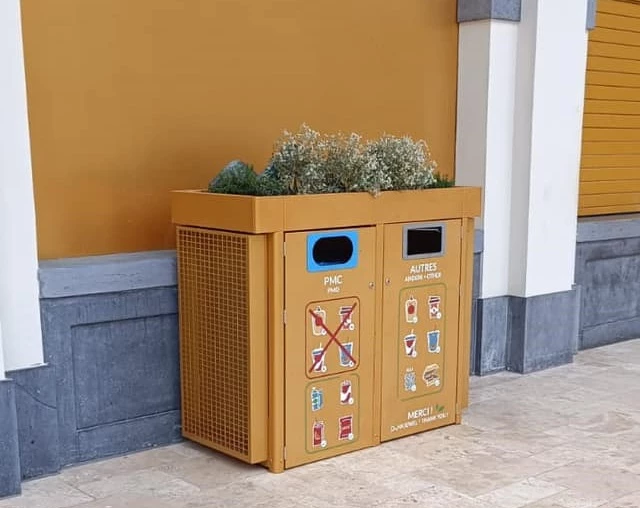
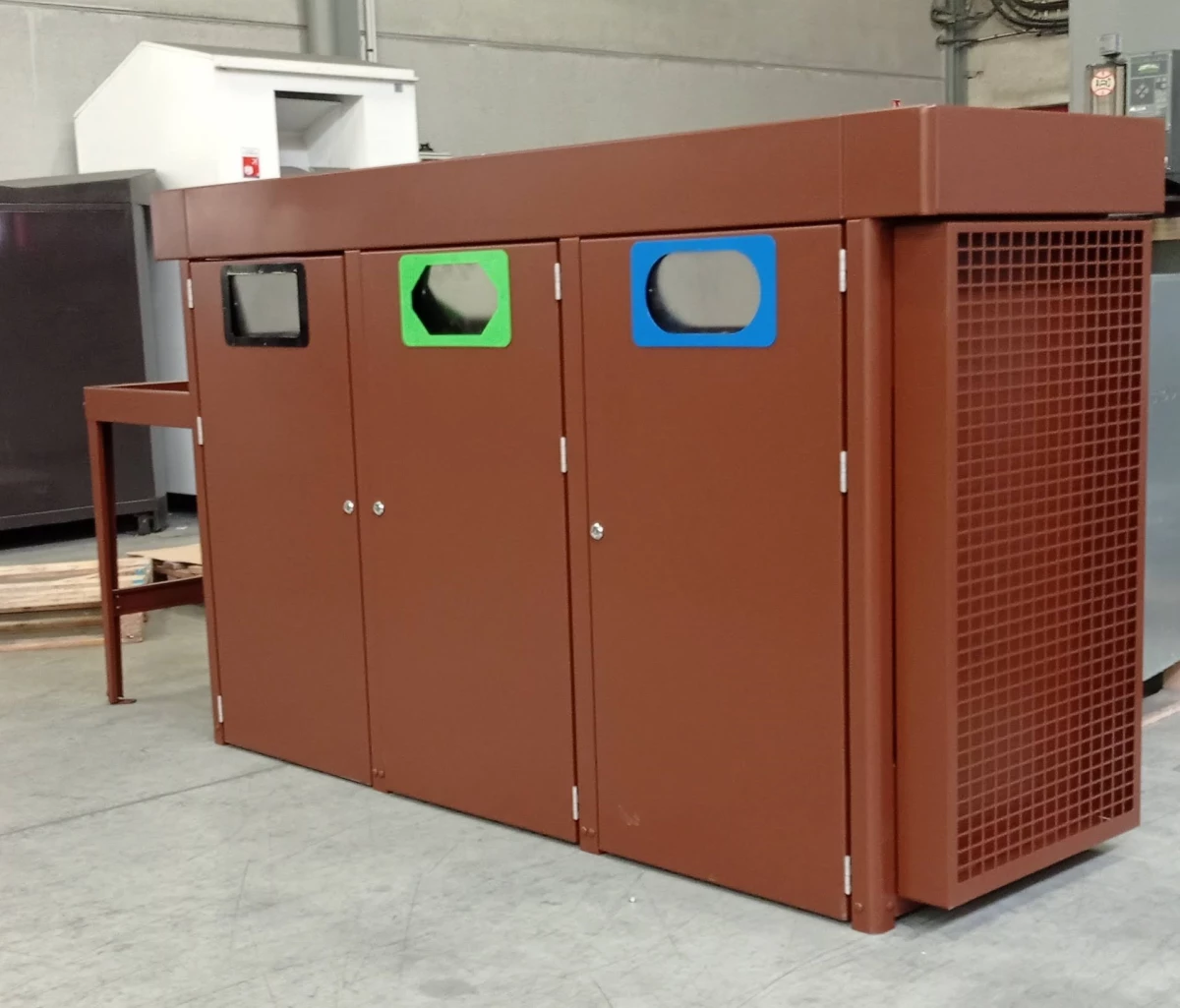
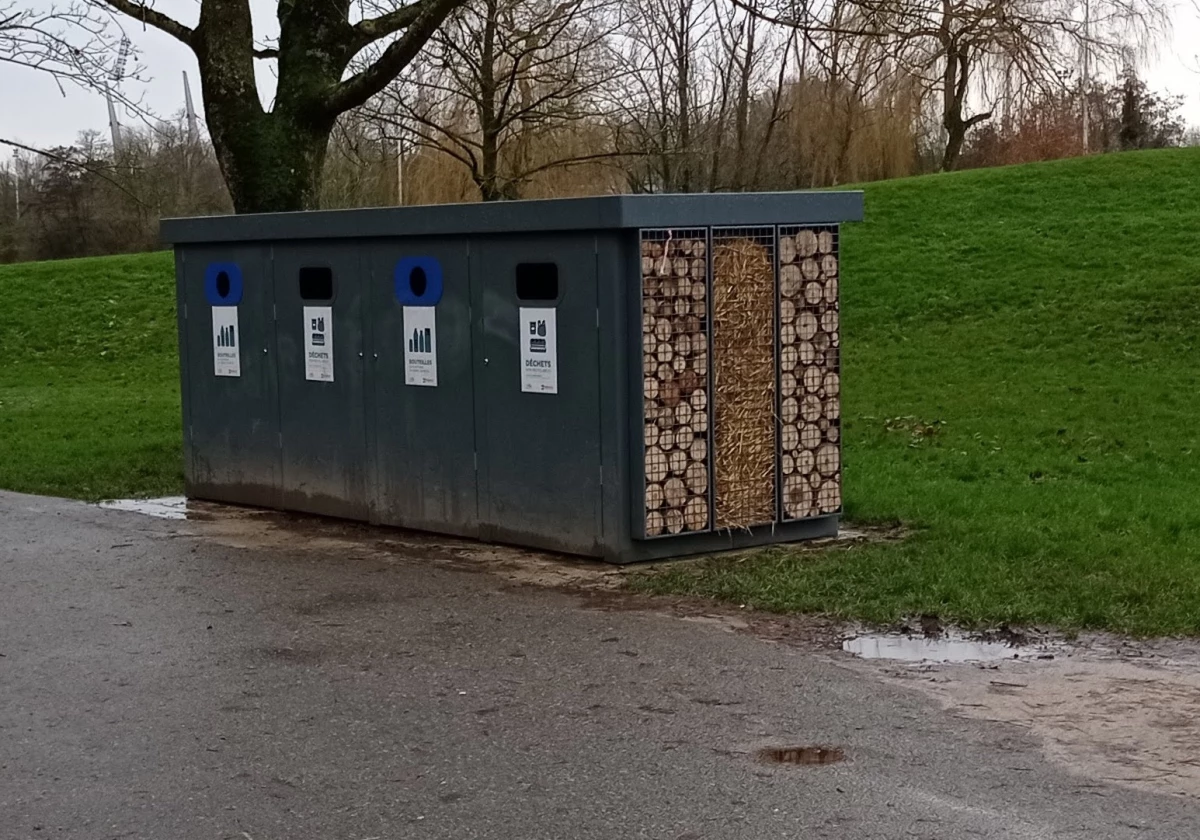
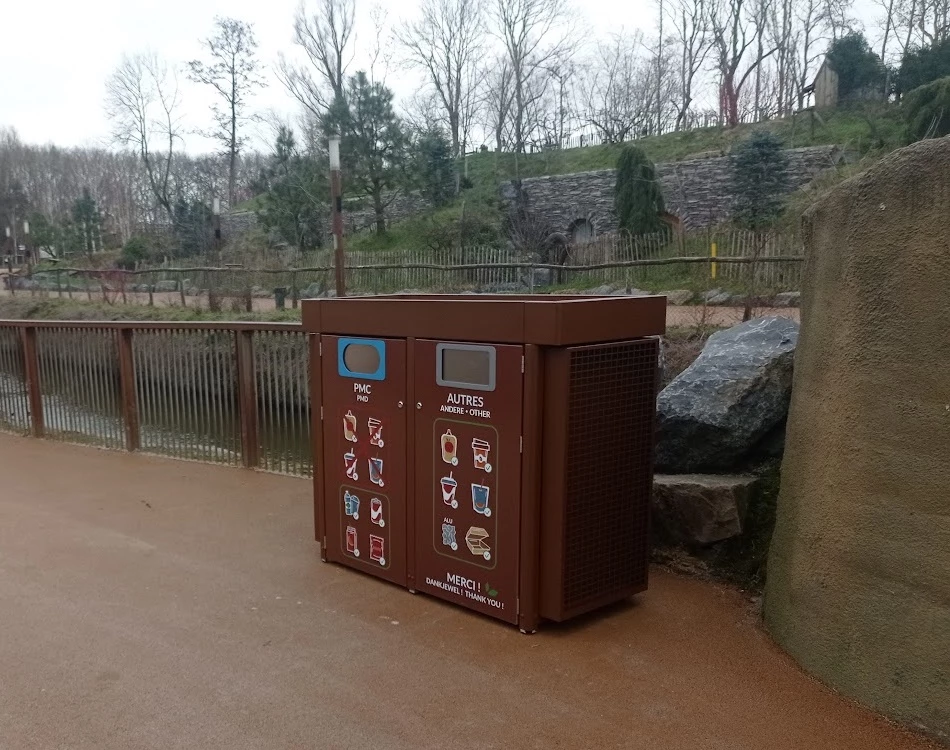
In parks and landscaped public spaces, 120 to 760 L wheelie bins must remain easy to service while staying visually discreet. Conventional bin shelters often create a "hardscape" effect, and non-engineered planter add-ons can suffer from insufficient soil volume and waterlogging, leading to plant failure and hygiene issues. Econox addresses this with the Sybille range: plantable bin shelters combining engineered planter volume, overflow drainage and C4-rated painted galvanized steel for outdoor durability.
Description of the use case / service / project
Use case scope: parks and landscaped public spaces (typical municipal application)
This page describes a typical application scenario for local authorities and urban landscape operators managing waste points in parks, green corridors and other landscaped areas. The objective is to store high-capacity wheelie bins (typically 120 to 760 L) discreetly, without compromising daily servicing or the site's visual continuity.
1) The problem: discreet outdoor storage of 120 to 760 L bins without creating a hardscape block Operational constraints for park waste points
In a park environment, a waste point must remain:
Serviceable: clear access for collection crews, compatibility with standard plastic wheelie bins, and repeatable day-to-day handling.
Visually integrated: minimal "added object" effect in vegetation-dominant zones.
Robust outdoors: resistance to rain cycles, humidity and site-dependent corrosive exposure (urban pollution, proximity to coastal influence, etc.).
Typical technical failure modes with standard shelters and non-engineered planters
Landscape disruption: conventional enclosures visually cut planting lines and can read as a hard, technical block within a green area.
Insufficient soil volume when a planter is added as an afterthought: shallow planters offer limited root volume and reduced moisture buffering, increasing the likelihood of premature plant stress and failure.
Poor drainage and standing water: rainfall and irrigation may lead to water retention, waterlogging and localized soiling around the waste point.
Accelerated coating degradation risk: persistent moisture, trapped water and repeated wet/dry cycles increase the probability of early corrosion if the substrate and coating system are not specified for the exposure category.
Asset and maintenance risks
More maintenance interventions: additional cleaning, plant replacement, and corrective actions after waterlogging events.
Shortened service life: corrosion and coating damage can bring forward refurbishment or replacement costs.
Negative user perception: stained surfaces and water-soiled zones can degrade perceived cleanliness of the park.
2) The solution: Econox Sybille plantable bin shelters (120 to 760 L) with engineered drainage and C4 corrosion protection
Econox provides the Sybille range of plantable bin shelters designed for standard containers from 140 to 760 L, and commonly deployed in park configurations that may also include 120 L bins depending on local fleets. The shelter is conceived as a single engineered assembly: waste concealment + planter function + drainage management + outdoor corrosion protection. The solution is presented by Econox on the ForaIndustry use-case page.
1) Engineered top planter to sustain vegetation (not just decorative cladding)
The Sybille shelter integrates a top planter sized to provide usable soil volume for flowers or small shrubs in outdoor conditions. This directly addresses a frequent root cause of failure in improvised solutions: planters that are too shallow for stable root development and moisture buffering.
Functional benefit: restores vegetation continuity above the waste point to reduce visual impact in landscaped areas.
Typical fit: urban parks, greenways and sites where planners require "green continuity" around technical equipment.
2) Integrated overflow drainage to prevent waterlogging and local soiling
Instead of relying on ad-hoc openings or uncontrolled seepage, the Sybille range includes an engineered overflow system to evacuate excess water from rainfall and irrigation. This reduces standing water in the planter and helps maintain cleaner surroundings.
Hygiene and cleanliness: limits stagnant water and runoff-related staining around the shelter.
Plant health: reduces root stress associated with saturated substrates after heavy rainfall.
3) C4-rated painted galvanized steel for outdoor corrosion resistance
The shelter structure is specified as galvanized steel with a C4 paint system for environments requiring a robust corrosion protection level. Under ISO 12944, atmospheric C4 corresponds to high corrosivity conditions, commonly associated with industrial and coastal areas with moderate salinity. This positioning supports municipal expectations for durable outdoor street and park furniture.
Material/coating rationale: galvanized substrate plus protective paint system designed for outdoor exposure.
Aesthetic integration: RAL color selection to align with existing park furniture palettes.
4) Options aligned with park servicing workflows
Depending on servicing methods and site policy, optional equipment can be integrated to support operations and site usage:
Roll bag holder (configuration-dependent bag hook/support)
Insect hotel (biodiversity/educational option for ecological parks)
Tray holder (adapted to specific onsite usage and maintenance practices)
Why this solution is relevant for similar engineering and specification projects
A plantable bin shelter with engineered drainage and a C4-rated corrosion protection approach is relevant when projects must simultaneously manage:
Large container volumes with discreet storage (up to 760 L)
Landscape-driven constraints (parks, green urban design, visually sensitive areas)
Drainage and cleanliness control (avoid waterlogging, stagnant water and localized soiling)
Outdoor durability requirements consistent with a C4 atmospheric corrosivity environment classification