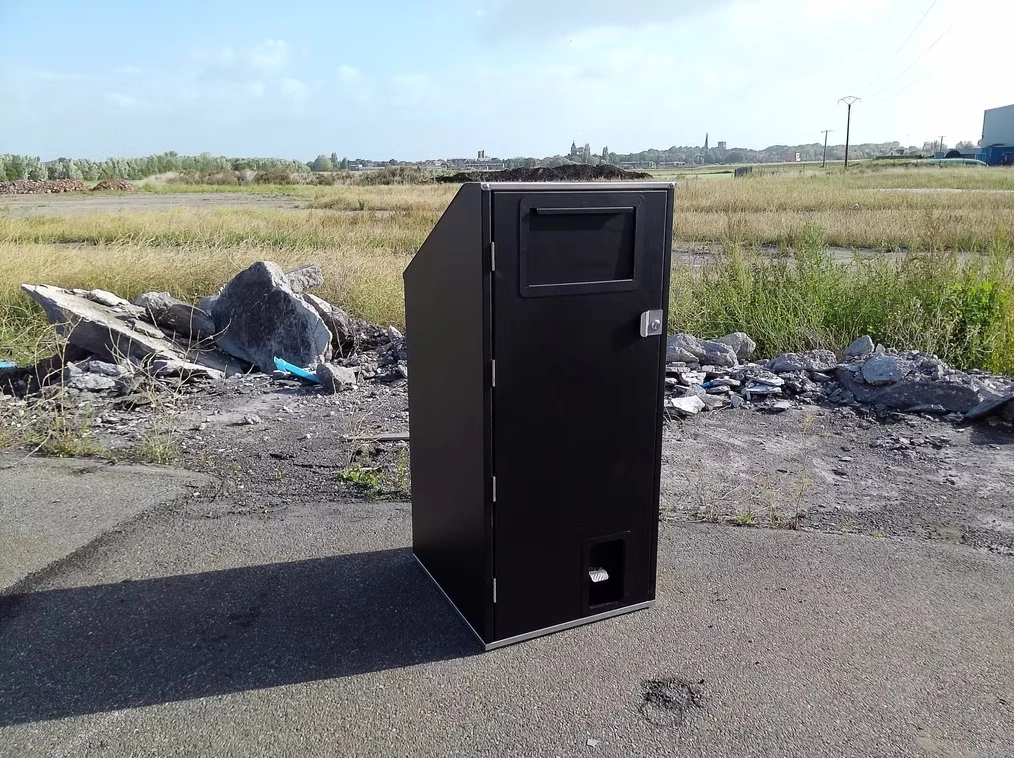
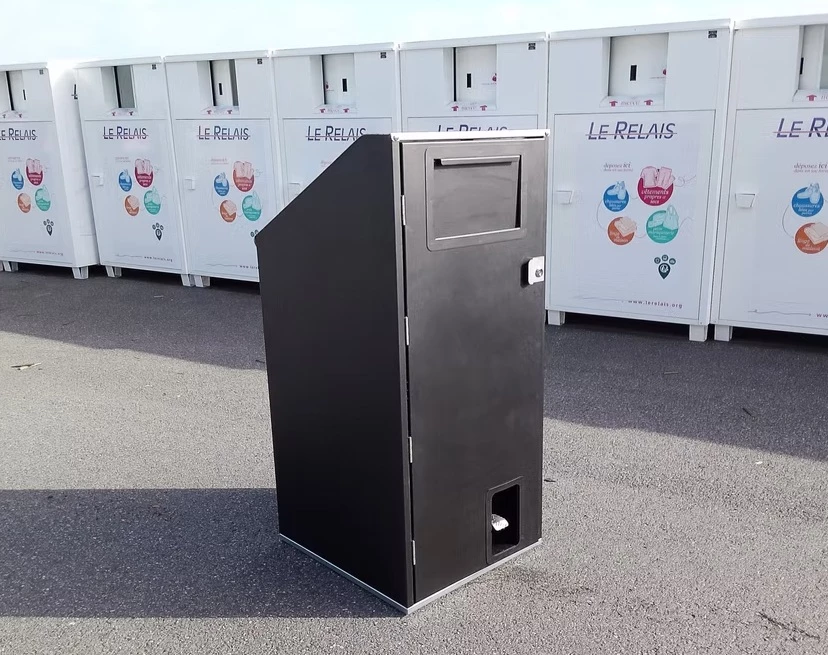
Municipalities and waste contractors operating shared bio-waste drop-off points often face combined issues: odor peaks from accelerated fermentation, leachate leakage when enclosures are not liquid-tight, and bio-waste contamination due to unauthorized dumping. This use case explains how Econox addresses these constraints with ventilated and watertight metal bin shelters, designed for aggressive organic-waste environments and configurable with secure locks or optional electronic card access control.
Description of the use case / service / project
Use-case scope: typical municipal bio-waste drop-off points (not a named client project)
This is a use case describing a common scenario for municipalities (councils), social landlords, and waste contractors operating shared storage points for source-separated food waste (bio-waste). At these locations, the bin shelter is not only a cover: it is a functional interface between residents, collection crews, and downstream organic-waste processing, with direct impact on hygiene, acceptance, and stream quality.
Problem statement: why food-waste storage points fail in the field
Food-waste storage areas concentrate several coupled constraints at once. In practice, performance degradation is rarely caused by a single failure mode; it is typically a combination of odor issues, liquid hygiene issues, and misuse (unauthorized dumping). This combination can increase service complaints and operating costs, and can also reduce the quality of the bio-waste stream.
1) Odor peaks driven by confined volumes and accelerated fermentation
When organic waste is stored in a confined enclosure without an appropriate airflow strategy, fermentation can intensify and generate stronger nuisance odors. Typical operational consequences include:
Lower acceptance by residents (avoidance of the drop-off point, complaints)
Increased frequency of cleaning and deodorization interventions
Degraded perception of sanitation around the collection point
2) Leachate generation and leakage when enclosures are not liquid-tight
Food waste generates leachate. If the shelter is not watertight, liquids can migrate to the ground and create:
Hygiene risks and surface contamination
Slip hazards and additional cleaning workload
Potential damage to ground surfaces and adjacent urban furniture
3) Bio-waste stream contamination caused by unauthorized dumping
When access is not secured, the storage point can become a convenient place for non-compliant waste disposal. This can:
Contaminate the bio-waste stream and disrupt downstream processing
Increase rejection and treatment costs for the operator
Engineering requirements for a robust bio-waste bin shelter
To address the above constraints simultaneously, an engineered shelter for food-waste bins typically needs:
Ventilation strategy: controlled aeration to limit odor build-up effects
Liquid-tightness: watertight construction to prevent leachate leakage
Corrosion resistance: resistance to acidic liquids, frequent washing, and cleaning agents
Access control: mechanical lock and/or electronic authorization to reduce misuse
Solution by Econox: ventilated, watertight, anti-dumping bin shelters for food waste
Econox designs and manufactures metal food-waste bin shelters combining controlled aeration and a watertight structure to mitigate odors and leachate leakage. To address contamination risks, the shelters can integrate secure access features, with an option for electronic card access control.
Key technical design choices aligned with bio-waste constraints
Controlled aeration: integrated ventilation to reduce confinement effects and help manage odor build-up at the storage point.
Watertight construction: designed to limit leachate egress and simplify hygiene control and cleaning procedures.
Corrosion-resistant build: galvanized steel with C4 coating plus stainless-steel parts to withstand aggressive organic-waste environments (acidic liquids and wash-down constraints).
Anti-dumping via access control: configurable locking systems with an optional electronic card access control to restrict use to authorized users.
Integration with common wheeled-bin formats (municipal and contractor fleets)
The shelter range is designed around typical bin volumes used in public-sector collection:
Compatible bin volumes: from 240 L to 720 L.
Example dimensional envelope (360 L configuration): 800 x 860 x 1259 mm.
Configuration example: UK-focused 140 L model with reduced trip hazard geometry
Econox also documents a 140 L-only variant optimized for UK use constraints, including a safety-oriented pedal design:
Roof: 1.5 mm stainless steel
Foot pedal: 3 mm embossed steel
Ground panel: 2 mm electrozinc-coated steel
Other parts: 1.5 mm electrozinc-coated steel
Overall size: 1387.4 (H) x 624 (L) x 712.06 (D) mm
Mass: 93 kg
Color: RAL 9005 (primary + finish)
Pedal protrusion: 2 cm (to reduce trip hazards and conflicts in narrow footprints)
Why this solution matches municipal bio-waste operational pain points
Odor control at the point of use: ventilation helps reduce the negative effects of fully confined organic-waste storage, improving user acceptance at shared drop-off points.
Hygiene and ground protection: watertight construction limits leachate spreading and supports predictable maintenance scope.
Lower contamination risk: secure access (including optional badge control) reduces unauthorized dumping that can compromise the bio-waste stream.
Durability in aggressive conditions: C4-coated galvanized steel and stainless parts improve resistance to acidic liquids, repeated wash-down, and cleaning agents.
Provider
This use case is delivered by Econox, a manufacturer specialized in metal fabrication for circular-economy collection equipment (bin boxes, drop-off points, and related urban furniture).
Additional manufacturer information is available on Econox's website: Econox Environment.